

PDF available here.
See our exclusive in The Hill and follow the conversation on social media here.
You can also see our report “Arsenal of Bureaucracy: How to Fix the U.S. Arms Sales Bottleneck” here.
Executive Summary
The Pentagon’s acquisition system is too slow, too rigid, and too dependent on antiquated processes to meet the demands of modern war. Built for a different era, it rewards delay, compliance, and narrow incumbency rather than speed, competition, and adaptation. As America celebrates its 250th birthday, we must also look ahead to the next 250 years. Congress has the opportunity to usher in a golden era for defense acquisition. The Department of War needs a new acquisition process that makes commercial solutions the default, shortens timelines, broadens the industrial base, and fields capability at the pace security requires.
Key Points
The United States faces a more dangerous threat environment than ever. The 2026 Annual Threat Assessment warns that conflict is becoming increasingly global as U.S. adversaries rapidly expand their military capabilities. Modern adversaries can strike American cities in minutes, and new technologies are making legacy weapons and procurement habits increasingly inadequate.
The Pentagon’s acquisition system has become an internal obstacle to American strength. Bespoke requirements, long timelines, sole-source contracting, and heavy compliance burdens make it harder to harness commercial innovation at the speed of war. The Biden Administration admired the problem, but the Trump Administration is pursuing historic reforms–and needs the support of Congress.
The post-Cold War “cathedral model” of acquisition no longer fits today’s strategic environment. A system built for slow, exquisite platforms and a narrow industrial base is poorly suited for an era of great-power competition, mass production, and rapid adaptation.
America’s greatest strategic advantage is its private-sector innovation base. Commercial firms, startups, and venture capital now drive most U.S. innovation, offering scale, lower costs, and faster iteration that the government cannot replicate on its own.
Recent executive and legislative reforms point toward a commercial-first defense model. The next step for policymakers is to lock in those changes so speed, competition, and commercial adoption become the norm rather than temporary exceptions.
Core Recommendations
- Codify “Commercial-First” in Title 10. Making commercial-first the default across the Department would force officials to justify bespoke solutions, instead of letting them remain the automatic fallback.
- Reform the use of advance market commitments (AMCs). Commercial businesses need stable government demand signals to justify investment. Reforming the Pentagon’s use of AMCs can facilitate commercial partners doing business with the government.
- Create a single “Commercial Pathway” acquisition lane. Building a dedicated, streamlined process for buying and scaling existing commercial technologies rather than forcing them through pathways built for legacy defense programs.
- Time-box requirements development for commercial buys. Strict timelines keep programs focused on defining the mission problem and minimum-needed capability, instead of letting requirements creep turn commercial purchases into bespoke development efforts.
- Mandate product market research before starting new programs. Require program offices to examine existing commercial, allied, and dual-use options before deciding to build something new from scratch.
- Standardize rapid downselects. Short, performance-based evaluations would replace drawn-out paper competitions and reward vendors who can actually deliver useful capability quickly.
- Stand up dedicated “Commercial Integration Program” offices. These offices would focus on the hardest part of commercial adoption—integrating technology into military systems, networks, and units fast enough to make it operationally useful.
- Institutionalize “attritable systems” in doctrine and budgeting. This would push the Department to fund systems built for scale, replacement, and resilience rather than overinvesting in fragile, exquisite platforms.
- Incentivize speed by tying promotion and command evaluations to fast fielding. Linking career advancement to rapid delivery of usable capability makes speed a priority, instead of letting risk avoidance and process compliance remain a safe path to advancement.
- Build a commercial talent pipeline through short-term tours and exchanges. Bringing in people with real commercial experience to help the Department build lasting in-house expertise on how fast-moving firms actually develop, price, and deliver technology.
Introduction
In the first State of the Union address, President George Washington stood before Congress and declared, “To be prepared for war is one of the most effectual means of preserving peace.” Washington understood the strategic value of displaying lethality and setting our then nascent military on a war footing even if he had no intent to deploy it. As the United States celebrates its 250th birthday, we are fortunate to have a president and Congress that understands the necessity of Peace Through Strength. In 1790, preparing for war meant establishing a standing army, manufacturing boots, constructing a coastal navy, and arming soldiers with muskets. Today, the diversification of threats demands a fundamental rethinking of how we resource our warfighters for the golden era of American power.
The world is more dangerous today than that of our early Republic. Weapons beyond anything George Washington could have imagined can now destroy American cities in minutes. China, Russia, Iran, North Korea, and Cuba all pose existential threats to the safety of the American people. The technological advancements of the 21st century have only heightened the danger. Hypersonic missiles, next-generation aircraft, drones, cyberweapons, and other emerging weapons make the traditional American weapons system at best vulnerable and at worst obsolete.
We also have an enemy within. Not a terrorist organization or sleeper cell network, but an enemy of process. Our defense acquisition process has made it difficult to harness and wield the true strength of American ingenuity, the commercial sector. Bespoke requirements, long timelines, sole-source relationships, compliance burdens that screen out nontraditional firms, low tolerance for iterative fielding, and inconsistent demand signals all undermine our nation’s ability to arm itself and protect American interests. Tweaks at the margins fail to meet the moment. These problems are embedded in how the Pentagon operates, and only structural reform can fix them. Secretary of War Pete Hegseth is right: We need to nurture lethality again in the Pentagon.
The Biden Administration failed to tackle threats overseas, and the result was a global collapse of American deterrence. Their policies of retreat led to the fall of Kabul, Russia’s invasion of Ukraine, the deadly October 7th attacks, an ascendant China, and a near-nuclear Iran. By contrast, the Trump Administration is now putting the military on a warfooting, checking our adversaries where it hurts them most. This Administration recognizes the great inheritance of American freedom that it carries from George Washington, Abraham Lincoln, Teddy Roosevelt, Dwight Eisenhower, and Ronald Reagan. The Biden Administration nearly squandered that legacy. As America enters its next 250 years, we have a chance to remake the military for a new golden era. To seize it, Congress must rethink how it arms the force and buy at the pace of war.
The Cathedral Model of Acquisition: Built for a Different Era
- The “Last Supper” locked in consolidation and set the conditions for today’s prime-dominated defense system. The 1993 Pentagon meeting–later known as the “Last Supper”–marked a turning point in the defense industrial base. As post-Cold War budgets tightened, the Clinton Administration signaled that consolidation was expected, and within five years roughly 51 comparable firms had narrowed to five dominant primes. The result was not just a smaller industry, but an acquisition system increasingly built around specialized, bespoke platforms with fewer alternatives. As Palantir Technologies CTO Shyam Sankar articulated, “the most important consequence of the Last Supper wasn’t a reduction in competition in the Defense Industrial Base, but the decoupling of commercial innovation from defense and the rise of the government Monopsony.” The primes remain indispensable, but the Pentagon became too dependent on a traditional process instead of a more adaptable one. To usher in the golden era of defense acquisition, the Pentagon needs a process that expands beyond the primes, not replace them.
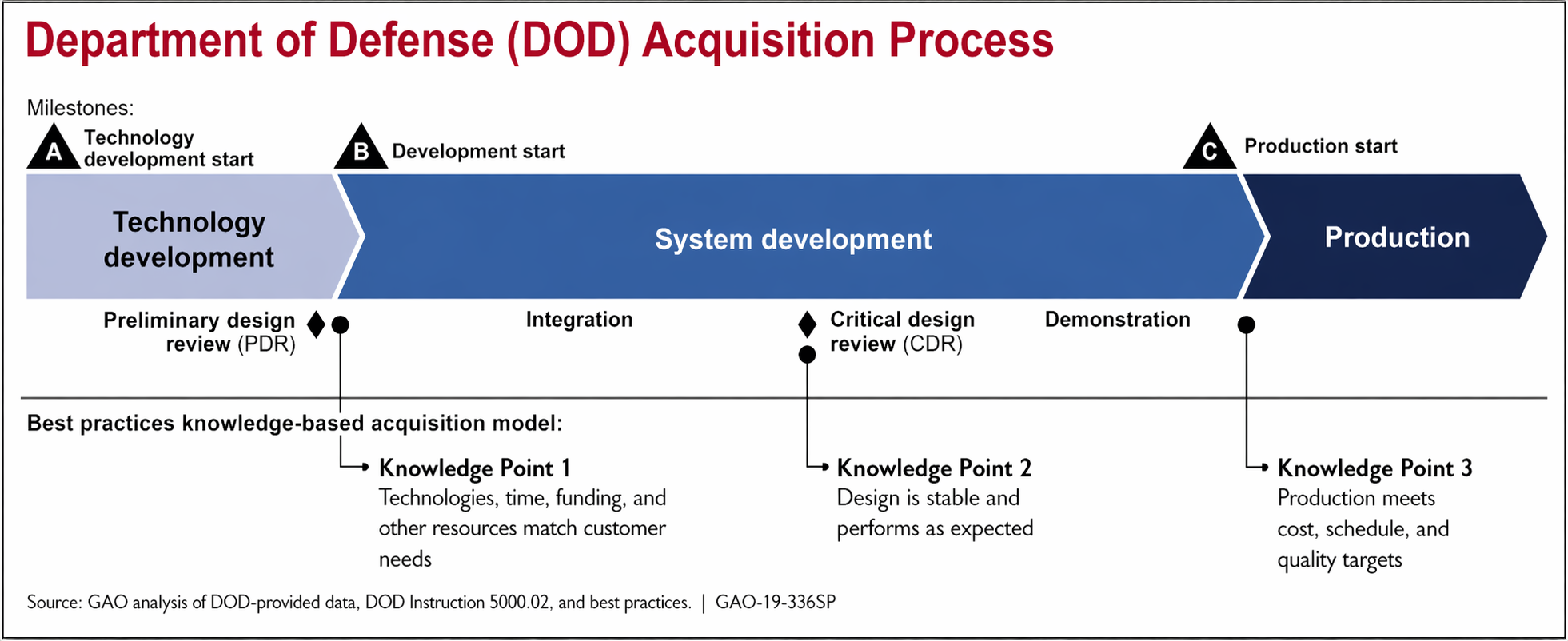
That post-Cold War model delivered stunning capability, but it was built for a world that no longer exists. For years, this new structure worked relatively well. With the collapse of the Soviet Union, Washington did not need a large conventional military to fight off the hordes of the Red Army. The United States transitioned to exquisite systems. Precision strike missiles, stealth bombers, and advanced attack submarines. These expensive investments were slow to produce but highly effective and survivable. However, this new post-Last Supper system was designed for a different era of geopolitics. In the immediate post-Cold War era, the biggest threat were dispersed terrorist organizations. Russia was weak, China was early in its rise, and limited technology kept Iran and North Korea at arms length. After just four years of Biden retreatism, now Russia is waging war on Europe, China seeks to overthrow American leadership, and Iran and North Korea threaten American lives daily. The slow acquisition process that produced exquisite systems is no longer sufficient. The United States needs to diversify its industry partners.
Overreliance on a cathedral model acquisition process reduces competition, slows innovation, and weakens U.S. security. The traditional procurement structure prioritized bespoke acquisitions. It embraced a cathedral model: defense platforms were built slowly, expensively, and beautifully. Under the cathedral model, it can take over ten years to deliver an operational capability, with that number rising to 12 years in 2025. A critical failure in the cathedral model is the overreliance on sole-source contracting. A whopping 44 percent of defense contracts from 1998 to 2003 were non-competitive, meaning that these contracts are not open for public bidding. For recent years, that estimate remains around 40 to 50 percent of contracts are non-competitive. Innovation companies have struggled to break into defense contracting because of the government’s overreliance on sole-sourcing, harming the American taxpayer. Small business participation in defense contracts has fallen by over 40 percent in the past ten years. The top 15 defense innovation companies still only account for 0.84% of total procurement obligations in 2025. Companies like Anduril, SpaceX and Palantir alone account for only 0.71% of total obligations. The cathedral model cannot be fixed or reformed; a new golden era for the U.S. military demands a new acquisition model.
The Way Forward: Harnessing American Ingenuity
- America’s decisive edge is its private sector innovation engine. The private sector is the life blood of American research. In 1964, the federal government funded 67 percent of all U.S. research and development. As private sector innovation was unleashed, federal R&D fell to only 18 percent while businesses funded 76 percent by 2022. Beyond just R&D, the sheer innovation surface is massive. In 2023, U.S. businesses generated $50 trillion in gross output. Startups are peppering the country becoming a core foundation to American ingenuity. The Census Bureau reported over 500,000 business applications in January 2026 alone, a 7.2 percent jump from December 2025. American innovation is accelerated by the burgeoning venture capital industry which in 2024 closed 14,000 deals with $215 billion, 57 percent of global VC deal value. While the government dominated innovation in the 1950s and 1960s, that is no longer true. Katherine Boyle of Andreessen Horowitz captured it perfectly: “Dynamism in America is not being spurred by policy in Washington—it’s being driven by a growing group of technologists that are solving problems of immense national importance.” Washington needs to embrace the private sector.
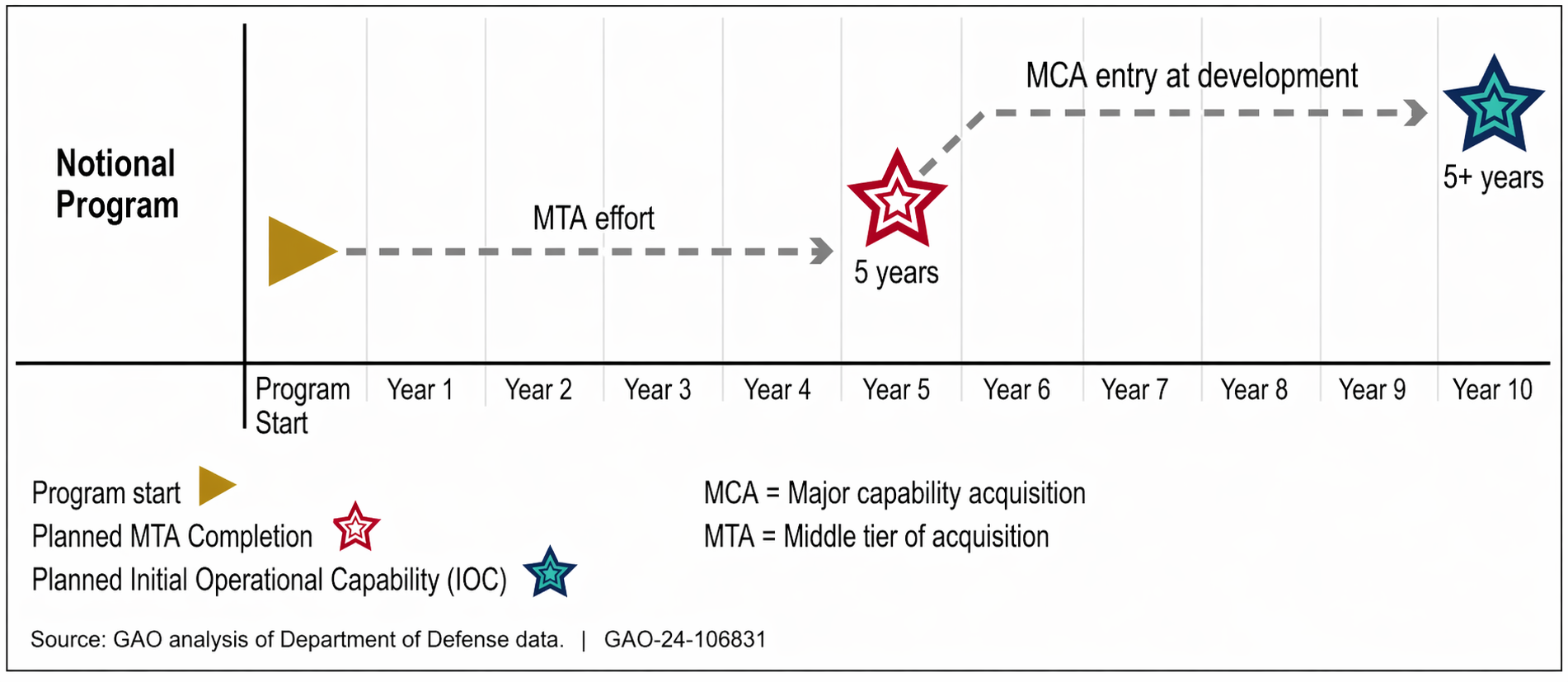
Protect taxpayer dollars by buying into existing learning curves. Traditional defense companies usually have one client, the U.S. government. Commercial companies have many clients and with that comes more production. Each time quantity doubles for the production of a product, costs decrease. NASA has already seen the value of switching to commercial. NASA determined that a single cost of the Space Shuttle delivering cargo to the International Space Station costs roughly $272,000 per kilogram. SpaceX can do that same delivery at roughly $89,000 per kilogram. NASA determined if NASA were to develop the Falcon 9 under traditional government process it would cost $1.7 to $4 billion. SpaceX’s development cost for the Falcon 9 was roughly $390 million. NASA is a different agency than the Department of War, but NASA’s transition to commercial shows how taxpayer dollars can be saved by empowering companies and buying into productivity.

Scale is a commercial competence the government does not have. Currently, the Pentagon buys key items in hundreds per year (191 jets, 600 missiles, etc.), the commercial sector produces in millions and billions per year. Dual use companies that produce both military and nonmilitary products are exceptional future partners for the Department of War. Drone manufacturing is a prime example. Drones have an important nonmilitary market for hobbyists, companies, and nonmilitary government agencies. As commercial drones scale, the Department of War can utilize commercial scaling for purchasing drones. Ukraine’s “Drone Army” perfectly encapsulates the asymmetrical benefits of weaponizing commercial drones en masse for operational advantage. As we have seen with the recent operations in Iran, one-way attack drones can be deployed with devastating, asymmetric effects. For the first time, the United States has utilized Low-cost Uncrewed Combat Attack Systems, or LUCAS drones. While these drones are not commercial products, they demonstrate the immense value of procuring cheap, attritable systems with speed.
Speed as Strength: Reforming Acquisition to Deliver Capability Faster
- Breaking procurement bottlenecks is essential to produce cutting-edge capabilities for the warfighter. The White House ordered a rapid overhaul of “antiquated” defense acquisition with an emphasis on speed, flexibility, execution, modernization of the acquisition workforce, and incentives for risk-taking and innovation. The directive explicitly ordered that the Pentagon adopt a “first preference for commercial solutions.” This action was the first step toward the biggest acquisition reform program since World War II.
- A commercial-first default matters because buying faster and cheaper is now a military necessity, not just a budgeting preference. An early Trump order formalized an administration-wide preference for commercial solutions and cost-effective contracting approaches. This order was built on the previous one by strengthening the policy basis for commercial-first buying rather than bespoke development. It orders “the Federal Government to utilize, to the maximum extent practicable, the competitive marketplace and the innovations of private enterprise to provide better, more cost-effective services to taxpayers.”
- Rewiring acquisition around warfighting matters because a slow contracting system produces a slow military. The Secretary of War rolled out a major acquisition transformation program emphasizing Commercial Solutions Openings (CSOs) and Other Transaction Agreements (OTAs) as core mechanisms to accelerate awards and commercial fielding. The directive orders DoW to issue guidance “whenever feasible” that treats commercial products and offerings as the preferred acquisition approach. The new system aims to expand the pool of qualifying vendors to diverse contracting. The new directive is a major restructuring designed to prioritize commercial-first solutions. If commercial solutions are not an option, only then can the bureaucracy pursue new development.
- Congress matters most because only statute can make commercial-first reform durable enough to outlast changes in leadership. The FY2026 NDAA is the first real attempt in years to institutionalize “commercial-first” acquisition reform into U.S. law, in large part by importing major elements of Sen. Wicker’s FoRGED Act agenda: provisions to prioritize commercial acquisition, eliminate bureaucratic and statutory barriers, support portfolio management, and expand the industrial base—especially commercial companies and startups. In practical terms, the NDAA doesn’t just encourage commercial buying. It goes even further by pushing commercial toward becoming the procedural starting point for Pentagon contracting decisions. FoRGED was designed to layer in structural reforms, including codifying Portfolio Acquisition Executives (to institutionalize portfolio management) and requirements-side changes that reduce bureaucratic drag.
Recommendations:
- Codify “Commercial-First” in Title 10. Make commercial-first a statutory presumption so it outlives any one Secretary, memo, or pilot program. Today, “commercial where practical” is too easy to waive in practice—especially when programs default to bespoke requirements, cost-plus contracting, and compliance-heavy pathways that repel non-traditional firms. A Title 10 presumption forces the burden of proof onto the bureaucracy: if DoW wants to go bespoke, it must explain why commercial items, services, or systems cannot meet mission needs. That single shift adjusts incentives across the system because it makes commercial adoption the baseline rather than the exception. The Pentagon should be open for business, encouraging innovation companies and small businesses across the country to compete for contracts.
- Reform the use of advance market commitments (AMCs). Commercial firms need stable government demand signals to justify investment. Reforming the Pentagon’s use of advance market commitments would make it easier for commercial partners to do business with the government and would help unlock private capital for firms seeking to enter the defense market. Because private companies plan around consistent, multi-year demand, Congress can strengthen that signal by expanding and improving AMC authorities. Done well, this would help the government draw on private investment, save taxpayer money, and support private-sector job growth.
- Create a single “Commercial Pathway” acquisition lane. The Department needs one acquisition lane built specifically for buying and scaling things that already exist in the market—software, autonomy stacks, sensors, drones, comms, logistics services. A Commercial Pathway should have standardized templates, short decision cycles, clear authorities, and predictable contracting tools. Congress can institute a pilot program to track progress and ensure accountability. The point is to remove structural friction that makes commercial firms walk away: uncertain timelines, shifting requirements, and compliance demands that assume a legacy prime. A single lane also makes accountability possible—if commercial buys are slow, everyone can see where the process is failing.
- Time-box requirements development for commercial buys. Requirements are where speed goes to die, especially when the system tries to specify an immaculate product rather than the minimum capability that provides operational advantage today. For commercial buys, requirements should be time-boxed and scoped to outcomes: define the problem, the operating context, and a small set of measurable performance thresholds—then let products compete. Time-boxing prevents the common failure where requirements expand to match exquisite demands, turning a commercial opportunity into a bespoke development program by paperwork. If a requirement can’t be written clearly and quickly, that’s a signal the government doesn’t yet understand the problem well enough to lock in a solution. It should prototype and learn, not over-specify.
- Mandate product market research before starting new programs. Most new starts on projects assume the answer must be built from scratch. That assumption is costly, slow, and often wrong—especially in domains where commercial cycles are measured in months, not decades. A mandatory product market research directive forces program offices to prove they looked hard at what already exists—commercial items, allied capabilities, dual-use platforms, and compatible software—and to justify why those options cannot meet the mission with integration or reasonable modification. American taxpayer dollars shouldn’t only go to a handful of big companies. American workers, small businesses, innovation companies, and tech startups from every state should be able to participate in arming the warfighter. This is how you protect taxpayer dollars and time: you buy into existing learning curves, existing supply chains, commercial efficiencies, and existing reliability data instead of paying to reinvent them only inside the government or government contractors.
- Standardize rapid downselects. DoW often runs “competitions” that are really slow-motion paperwork marathons, rewarding firms that can endure bureaucracy rather than those that can deliver capability. Rapid downselects flip that logic: run short, funded sprints with multiple vendors; test in realistic conditions; then choose winners quickly based on performance metrics that operators care about. Congress should support a pilot program to test the effectiveness of rapid downselects. Through congressional oversight, the United States can standardize this approach to create muscle memory across the Department—common evaluation methods, repeatable contracting language, and predictable schedules—so each new commercial buy doesn’t require inventing a process from scratch. The result is faster fielding, sharper incentives for industry to iterate, and fewer years wasted funding “science projects” that never transition.
- Stand up dedicated “Commercial Integration Program Offices.” Buying commercial components is the easy part; integrating them into military architectures, networks, logistics, training, and sustainment is where programs stall. Dedicated Commercial Integration POs solve the real bottleneck by specializing in integration engineering, test, cyber accreditation, missionization, and fielding into units—across portfolios rather than one exquisite platform at a time. These offices should be staffed for speed (product managers, software engineers, test integrators, contracting experts) and empowered with flexible funding to adapt systems as real-world lessons emerge. Their mission is explicit: support private businesses by taking commercial tech and making it operationally usable without forcing every vendor to become a mini-prime.
- Institutionalize “attributable systems” in doctrine and budgeting. In a world of great-power conflict and massed precision fires, survivability is no longer just stealth and exquisite performance—it’s also production, replacement, dispersal, and resilience. “Attributable systems” institutionalize that logic: systems designed to be produced cheaply, in quantity, replaced quickly, and scaled under stress, with modularity and supply chain realism baked in. If this preference is written into doctrine and reflected in budget choices, it changes what gets funded: fewer fragile single points of failure, more distributed capacity, more swappable components, and more stockpiles of what actually gets consumed in conflict. This is how you align a new era of acquisition with the core strategic requirement of industrial endurance.
- Incentivize speed by tying promotion and command evaluations to faster fielding. The acquisition system gets exactly what it rewards—and today it rewards risk avoidance, process compliance, and paper “success” more than operational outcomes. If speed is strength, then speed must be career-relevant: promotion boards and command evaluations should incorporate metrics like time-to-field, percent of programs meeting delivery timelines, iteration cadence, and units equipped. Done right, this doesn’t mean reckless shortcuts; it means rewarding leaders who manage risk intelligently, ship capability early, and improve through iteration rather than waiting for perfection. When reputational incentives align with fielding outcomes, the bureaucracy stops treating speed as a slogan and starts treating it as a professional standard. Congress must ensure promotions reward the priorities it writes into law. We cannot let bureaucratic drift fail the American warfighter.
- Build a commercial talent pipeline through short-term tours and exchanges. Commercial-first acquisition requires people who understand commercial product cycles, pricing, contracting norms, and how high-velocity engineering teams actually ship. DoW cannot grow that expertise solely through traditional career paths; it needs structured short-term tours, exchange programs, and direct-hire pipelines that bring in product managers, software leads, manufacturing operators, and growth-stage procurement experts. Short stints (6–24 months) are especially valuable because they inject current market knowledge without requiring a full career switch—and they create alumni networks that permanently improve DoW’s ability to work with non-traditional suppliers. Pair that with training and clear roles inside the Commercial Pathway and Integration POs, and you get a repeatable engine for institutional competence, not one-off “innovation outposts.”
Conclusion
It is time to make America’s military lethal again. After Biden’s four years of retreat, the Trump Administration is restoring strength and confidence to our armed forces. To give American warfighters the tools they need to win, Congress must work with DoW to move beyond a system built around bespoke processes and better harness the unmatched dynamism of the American worker. As Congress looks forward to the next 250 years, we have an opportunity to usher in a new golden era of American power. Harnessing American ingenuity by embracing American workers, entrepreneurs, and innovators from every corner of the country is that path forward.
Glossary
Attributable systems — Systems designed to be produced in quantity, replaced quickly, and scaled under stress.
Bespoke acquisition — Custom-built systems designed uniquely for DoW, typically slower and more expensive because they don’t benefit from commercial learning curves, markets, or repeat production.
Commercial-first — A process that encourages or requires DoW to buy commercial products and services first, then modify commercial solutions if needed, and only pursue new development as a last resort.
Commercial Solutions Opening (CSO) — A solicitation method designed to acquire innovative or commercial solutions quickly, often used to speed awards and broaden access for non-traditional vendors.
Compliance burden — The cumulative regulatory, reporting, audit, and process requirements that raise the cost of doing business with DoW, disproportionately harming startups and small firms.
Consolidation (defense industrial base) — The post–Cold War trend toward fewer major defense firms, reducing competition and increasing reliance on a small number of “prime” contractors.
Cost-plus contracting — Contract type where the government reimburses allowable costs plus fee; useful for uncertain R&D but can weaken incentives for speed, cost discipline, and scalable production.
Downselect — The step in a competition where DoW narrows multiple contenders to fewer vendors (or one), ideally quickly and based on performance in realistic testing.
Dual-use company — A firm whose products serve both military and civilian markets, enabling DoW to benefit from commercial scale, cost curves, and rapid iteration.
Fielding — Delivering a capability into operational units for real use (not just prototypes or demos).
FoRGED Act — Senator Wicker’s defense reform agenda focused on breaking acquisition bottlenecks, expanding commercial participation, reducing barriers, and institutionalizing portfolio-style management.
Innovation ecosystem — The network of large firms, startups, investors, universities, and supply chains that produces and scales new technologies in the U.S. economy.
Learning curve — The manufacturing effect where unit costs decline as production experience accumulates—often summarized as lower costs as cumulative output rises.
Non-competitive/sole-source contract — A contract awarded without full and open competition, often increasing cost risk and reducing innovation pressure.
Other Transaction Agreement (OTA) — A flexible contracting mechanism outside standard FAR rules, often used to prototype and accelerate awards to non-traditional vendors.
Portfolio management — Managing acquisition as a set of related capabilities with flexible tradeoffs across programs, rather than as isolated, single-platform efforts.
Portfolio Acquisition Executive (PAE) — A senior official accountable for managing a portfolio of capabilities to improve speed, coordination, and resource allocation.
Scale — The ability to produce in large volumes quickly, with robust supply chains and repeatable manufacturing—typically a commercial strength.
The “Last Supper” — July 21, 1993 Pentagon dinner where DoD signaled industry should consolidate, accelerating the shift from many comparable firms to a prime-dominated structure.
Time-boxing — Setting hard deadlines (e.g., 60–90 days) for steps like requirements definition to prevent analysis paralysis and force decisions.
Warfighting Acquisition System — The reform framing that acquisition should prioritize speed and urgent operational delivery, emphasizing commercial solutions and streamlined pathways.