
For full PDF, click here.
NATO Win Tracker
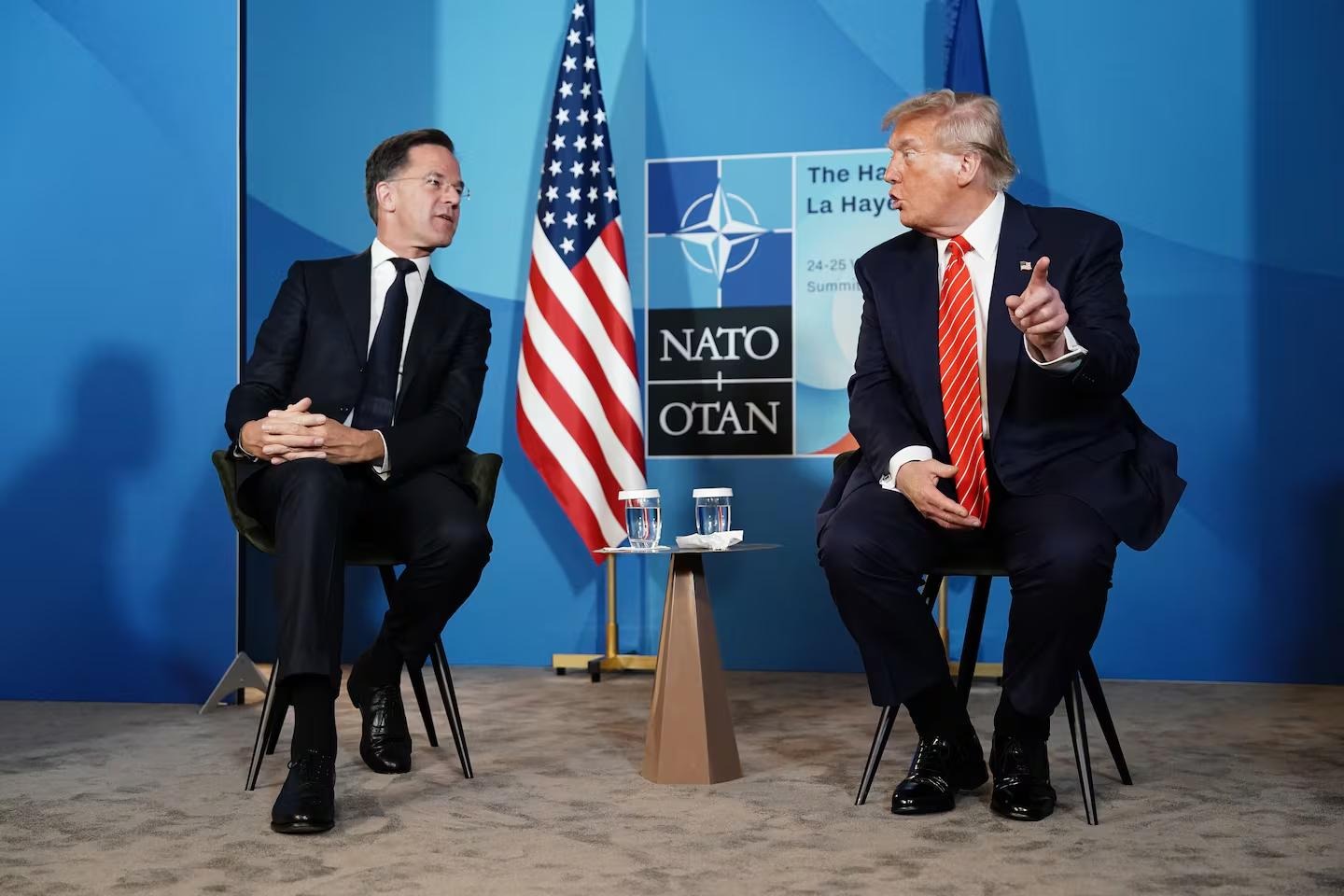
As the NATO Summit concludes, one fact has become impossible for the legacy media and foreign policy establishment to deny: President Trump has strengthened NATO in ways that none of his predecessors could.
For decades, American presidents urged Europe to rearm while U.S. taxpayers continued to carry a disproportionate share of the burden. A sea-change came in 2017 when President Trump demanded outcomes instead of promises—and the results speak for themselves. Today, nearly every NATO member meets the Alliance’s longstanding two percent defense spending floor, nearly every ally has committed to raising core defense spending to 3.5 percent of GDP while working toward the five percent target, and NATO Europe and Canada have committed approximately $1.2 trillion in additional defense spending since President Trump’s first term. NATO Secretary General Mark Rutte has appropriately coined this sum as the “Trump Trillion.”
These victories were far from inevitable. They were achieved because the Trump Administration rejected the failed bipartisan consensus that polite diplomacy alone could solve NATO’s burden-sharing crisis. President Trump ignored the media’s premature obituaries of the Alliance and the establishment’s warnings that forcing allies to pay their fair share would fracture NATO.
Those critics were wrong. Rather than weakening NATO, the Trump Administration has led its rescue from decades of managed decline by pushing its most significant military revitalization since the end of the Cold War. President Trump didn’t break NATO—he broke Europe’s dependence on the American taxpayer. And now, the very media critics and liberal elites who spent years predicting NATO’s collapse are trying to explain its comeback.
That matters because, despite its imperfections, NATO remains one of the most successful military alliances in history. The Alliance was created after two catastrophic world wars claimed more than half a million American lives on European battlefields. NATO was never intended to become a welfare program for European defense. It was created because America was tired of sending its sons to fight and die in Europe’s wars. Strong deterrence is the Alliance’s founding principle—not American subsidization. President Trump’s burden-sharing revolution is not a departure from that mission; it is a return to it.
For nearly eighty years, NATO has fulfilled that mission by winning the Cold War, preserving peace across Europe, deterring conflict with Russia, and serving as a force-multiplier for America’s security. Today, however, the West confronts its most dangerous strategic environment since the Cold War. Russia continues its campaign of aggression in Europe. Communist China seeks to divide the democratic world and displace American leadership. Iran arms terrorist proxies across the Middle East while hostile powers increasingly exploit weakness and political division within the West. At the same time, decades of complacency within the West have left too many NATO members underprepared for the challenges ahead.
America cannot afford a weak NATO that expects the United States to carry the burden alone. America needs an Alliance that is stronger, fairer, and more effective for the American people.
The Trump Administration’s NATO strategy reflects that principle. While the Obama and Biden Administrations treated NATO as a diplomatic talking shop—long on communiqués and short on military capability—the Trump Administration is restoring the Alliance’s original purpose: deterring America’s enemies through overwhelming strength. NATO’s transformation from a lethargic social club into a credible Western alliance is historic.
For POLARIS’s NATO-wide alliance assessment, click here.

To quantify the Trump Administration’s successes and identify where more work remains, POLARIS National Security has developed a ‘NATO Win Tracker’ highlighting the Alliance’s remarkable military resurgence in recent years. First, we assess how the alliance has progressed as a whole.
From that baseline, we assess every NATO member across two core dimensions: military contributions and strategic alignment with the Alliance’s collective security objectives. Based on those findings, members are grouped into three tiers:
Tier 1 Allies—Model Allies
Every NATO ally contributes to the alliance, but some more than others. Tier 1 allies are not the biggest countries taking advantage of their absolute size to garner prestige—in fact, only one major European country makes the list. Rather, these allies are defined not by meeting expectations but by exceeding them.
Each Tier 1 ally contributes in unique but substantial ways. Almost all exceed the non-US NATO average on defense spending, but that alone is not what earns this designation. What separates Tier 1 allies is leadership. While Tier 2 and Tier 3 countries often require inducement and pressure to meet the basic obligations of alliance membership, Tier 1 allies are demonstrating what genuine engagement looks like: investing in modern military capability, contributing to multiple NATO missions, shouldering alliance burdens out of shared conviction rather than external pressure, maintaining clear-eyed threat assessments, robustly supporting Ukraine’s defense, sustaining resilient public support for the alliance, and consistently enabling American and NATO operations when it matters most.
Therefore, these policy recommendations are designed to reward Tier 1 allies for their leadership—and in doing so, create an incentive structure that encourages other allies to aspire to the same standard.
Tier 1 Country Assessments:
Policy Recommendations:
- Priority Access to Advanced US Defense Technology: Tier 1 allies receive first consideration for co-development programs, next-generation platform sales, and defense industrial partnerships currently reserved for the closest US partners.
- Forward Basing Preference: US rotational and permanent force presence prioritized toward Tier 1 hosts.
- Senior Voice in NATO Command and Planning: Preference in nominations for senior NATO command positions, framework nation roles, and strategic planning processes.
- Enhanced Bilateral Security Assurances: Reinforced extended deterrence commitments, nuclear consultation mechanisms, and joint contingency planning above standard bilateral channels.
- Trade and Economic Preference: Favorable treatment in US trade negotiations, tariff schedules, critical minerals agreements, and defense supply chain programs making burden-sharing result in tangible economic returns.
Tier 2 Allies—Average Allies
Tier 2 allies are good partners. They meet alliance expectations without consistently exceeding them, contributing meaningfully to collective security but rarely leading across multiple domains. These countries require more pushing from Washington and NATO leadership to fulfill their obligations than Tier 1 allies do, and they have identifiable shortfalls that demand continued accountability. That said, they broadly accept that Europe must contribute more to the alliance—the gap is one of ambition and urgency, not fundamental commitment. Expect solid basing access, a reasonably modern military, and general alignment with NATO’s threat assessment. The task with Tier 2 allies is sustained pressure and targeted incentives to close the distance between adequate and excellent—the policy recommendations reflect that tension.
Tier 2 Country Assessments:
- Albania
- Belgium
- Bulgaria
- Croatia
- Czech Republic
- France
- Germany
- Greece
- Iceland
- Italy
- Luxembourg
- Montenegro
- North Macedonia
- Portugal
- Romania
- United Kingdom
Policy Recommendations:
- Conditional Industrial Incentives: Advanced US defense systems, co-development opportunities, preferred procurement are available to Tier 2 allies but tied to measurable progress on identified shortfalls with access expanding as performance improves.
- Basing and Presence Conditionality: US force presence levels in Tier 2 countries linked explicitly to defense spending trajectory and capability investment, signaling that presence is a partnership.
- Structured Accountability: Tier 2 allies placed in NATO working groups with Tier 1 peers on their specific shortfall areas, giving best-practice advice rather than relying solely on top-down US pressure.
- Ukraine Contribution Floors: Tier 2 allies pressed to meet a minimum Ukraine military aid threshold as a condition of full partnership benefits.
- Explicit Upgrade Pathway: Washington makes clear to each Tier 2 ally precisely what it would take to earn Tier 1 designation, creating a named and achievable timetable that gives governments a domestic political argument for higher contributions.
Tier 3 Allies—Lagging Allies
Tier 3 allies are the delinquents of the alliance. These countries still provide notable contributions that give reasons for membership, but their slacking demands a dramatic turnaround. Despite their commitments to NATO, Tier 3 allies actively undermine the alliance in one or more ways. These countries are usually content to free-ride off their European neighbors and make little concerted effort to take responsibility for their own defense. Some actively court NATO adversaries in Moscow and Beijing, while others undermine US operations that contribute to shared security interests. These partners need to understand the consequences of their free-riding and how it is to the detriment of the West’s security.
Tier 3 Country Assessments:
Policy Recommendations:
- Explicit Public Naming: Washington demands change by publicly identifying Tier 3 allies by name in congressional testimony, State and War Department reporting, and presidential statements.
- Consider Reduced US Force Presence: US rotational deployments, exercises, or permanent basing in Tier 3 countries are scaled back in proportion to their contribution shortfalls.
- Bilateral Trade and Economic Pressure: Washington signals that chronic NATO underperformance carries costs in trade negotiations, investment frameworks, and diplomatic priority.
- Mandatory Capability Remediation Plans: NATO requires Tier 3 allies to submit binding multi-year remediation plans with specific milestones to correct milestones, subject to annual alliance-level review.
- Formal Alliance Review Trigger: Sustained Tier 3 status over multiple years triggers a formal NATO review of that ally’s contributions and obligations and determines consequences if goals aren’t met.
President Trump has already achieved what generations of American presidents promised but failed to deliver: a Europe that is finally rebuilding its militaries. That is a victory not only for NATO, but for every American taxpayer who has spent decades shouldering Europe’s security burden.
But the job is not finished. NATO’s resurgence will only endure if every ally does its part and if Washington refuses a return to the failed policies of the past. POLARIS National Security measures that progress, celebrates those driving NATO’s revival, and identifies where more work remains.