
PDF version here.
Yesterday, House Republicans passed historic sanctions legislation on Russia, overcoming Democrats’ obstruction and sending the bill to President Trump’s desk. This is a win for U.S. national security and a major step toward peace in Ukraine. The legislation gives President Trump the economic firepower to increase pressure on Russia, raises the costs of Putin’s aggression, and will help bring an end to this war.
Putting Pressure on Putin to Make Peace
- President Trump is better armed to end this war by forcing Russia to reach a negotiated settlement. This bill empowers him with authority to impose devastating pressure to convince Putin that the economic price for stalling peace is too high to pay.
- Trump’s diplomacy has created a path for peace, but Putin believes prolonging the war will improve Russia’s bargaining position. By making delay more expensive, this legislation prevents Putin from running the old Soviet playbook: stalling until he thinks he has the upper hand.
- The bill preserves room for diplomacy while strengthening its chance of success. President Trump retains waiver authority, allowing him to dial up economic pressure when it serves U.S. interests and leverage sanctions relief for a deal.
- The end effect is simple: the financial apparatus behind Russia’s war will face American pressure. Putin must now choose between stopping the killing or watching Russia suffer as the economic costs of continuing the war mount.
What These Sanctions Accomplish
- They deprive Russia of energy revenues. Even after years of sanctions, Russia earns hundreds of millions of dollars a day from oil and gas exports. This bill targets those revenue streams, raising duties on Russian goods as much as 500 percent.
- They squeeze the Kremlin’s war budget. Russia’s energy sector accounts for roughly one-quarter of Russia’s federal income. Reducing that flow deepens fiscal pressure on Moscow at a time when military spending is straining its finances.
- They pressure Russia’s customers to abandon it as a supplier, further squeezing its economy, reducing its annual export revenues by tens of billions of dollars, and limiting its war funding. If they refuse, they face duties up to 100 percent on goods.
- They drive down the ruble’s value and force capital flight. Energy exports are a major source of Russia’s foreign currency reserves. Without those revenues, it will struggle to pay for foreign goods, tech, and industrial inputs—particularly for weapons.
- They close the loopholes keeping Russian oil flowing. Moscow has built a “shadow fleet” of vessels and intermediaries to evade sanctions and keep its oil moving. The bill targets the ships, owners, operators, and networks behind its sanctions evasion.
- They target the banks and financial web enabling Russia’s war. The bill hits Russia’s largest state-linked banks and foreign financial institutions doing business with them, while restricting transfers involving the Russian government and targeting financial-messaging systems used to circumvent sanctions.
- They cut Russia off from American capital. It prohibits new U.S. investment in Russia, bars Americans from buying Russian sovereign debt, and closes indirect routes into Putin’s economy via U.S.-led foreign transactions.
- They prevent Putin’s oligarchs and regime insiders from hiding. The bill targets Kremlin-linked oligarchs and officials, as well as executives of Russian defense, energy, and transportation companies supporting the war.
- The bill also targets Russia’s defense supply chains. Foreign firms that knowingly help Russia acquire critical military components can face U.S. sanctions, as can intermediaries that use deceptive transactions to move those goods.
House Democrats Chose Politics Over Peace
- While a few dozen House Democrats supported the bill, 152 voted against it. House Democrats showed their true colors: they’d rather play politics with national security than help deliver peace. They claim their objection was tariff authorities, but we all know this is about undermining Trump.
- House Democrats once again put political theater ahead of national security. That’s consistent with what they’ve done all year: shutting down the Department of Homeland Security, refusing to fund the military, and now opposing sanctions on adversaries.
- Their political games were so obvious that even Senate Democrats called them out. 49 of the Democrats who voted against the bill even co-sponsored it before flipping their positions. The bill did not suddenly become less effective.
- For years, Democrats have claimed to be tough on Russia—only to fold when pressure is needed. There’s a reason Putin invaded Ukraine while Obama and Biden were in office: he knew they were weak. House Democrats proved no different today.
- Much of Democrats’ support for Ukraine was always empty rhetoric. While lecturing about supporting Ukraine “as long as it takes,” Democrats have repeatedly opposed strong actions to end the war.
- House Democrats still haven’t learned from the war. In 2022, Republicans warned that blocking Russia sanctions would embolden Putin to invade Ukraine. Now, House Democrats tried to block Russia sanctions as Putin escalates attacks on the West.
- Thankfully, Republicans overcame the political theater and got the bill to President Trump’s desk. But this should be a warning to Americans of how Democrats in Congress intend to govern Congress: putting partisan politics above national security.
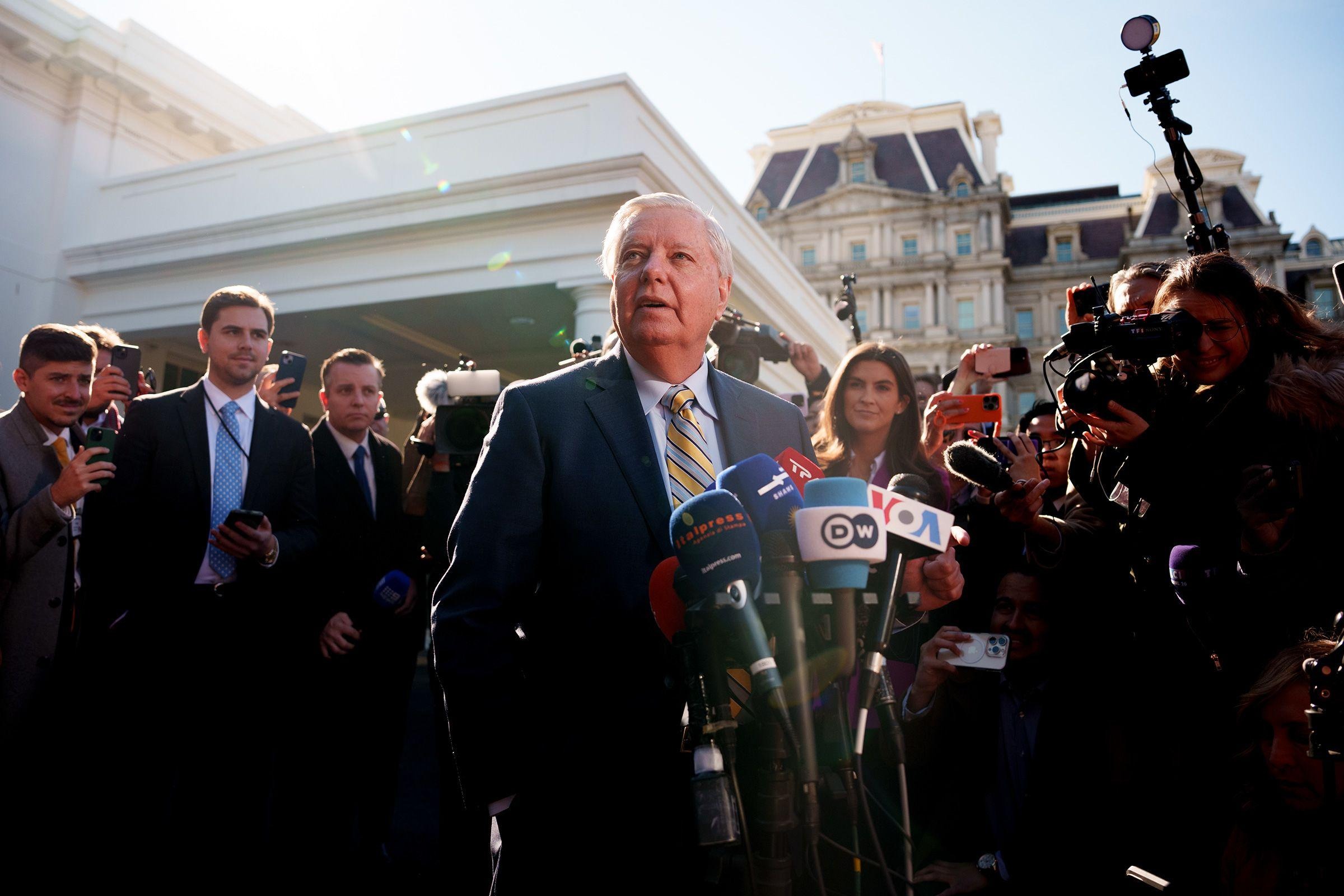
- Unlike House Democrats, Senator Lindsey Graham understood that peace requires making aggression costly. With President Trump’s signature, one of Graham’s final acts to put that principle into practice will become law.
Bottom Line: Congress just gave President Trump the economic firepower he needs to up the ante on Russia and deliver peace. While Democrats chose political theater, Republicans delivered—and America is stronger because of it.